Application guide · Canada
AMRs and material movement robots in Canada
Start with the load and the route. An autonomous mobile robot project includes pickup, movement, drop-off, traffic management and recovery when a trip cannot finish. The vehicle is one part of that system.
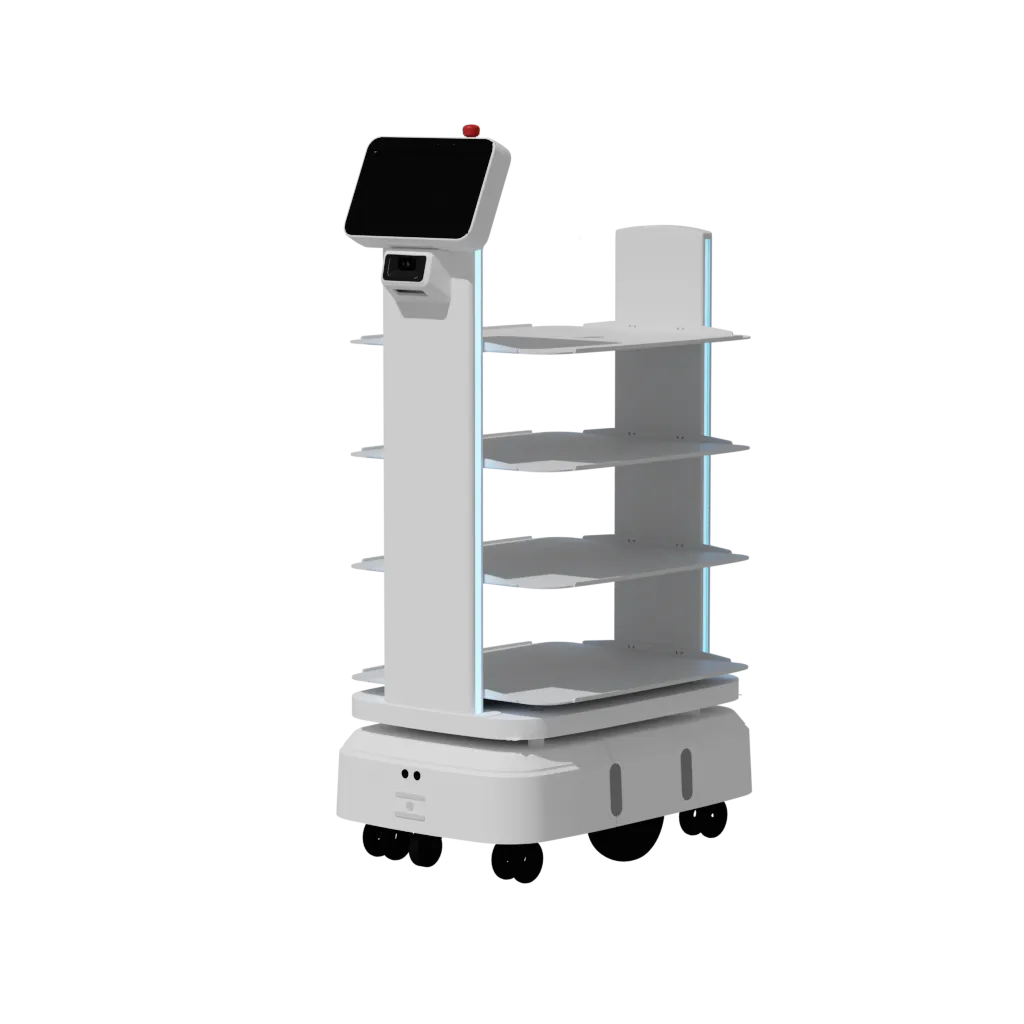
Equipment to explore
Factory delivery platform
Explore internal material movement with mobile robots. The shelf layout, load handling and route should be matched to your operation.
Configuration, Canadian availability and support scope are confirmed for your project.
Loads a video from the supplier’s media host when you press play.
Where to begin
Find the task worth automating.
Production replenishment
Explore repeatable movement of components from stores to workstations. Specify container dimensions, pickup positions and how urgent replenishment requests are handled.
Work-in-progress transport
Connect defined production stages while accounting for buffers and variations in cycle time. Decide whether the robot carries a load, tows a cart or transfers it mechanically.
Warehouse transfers
Evaluate movement between receiving, storage, packing and dispatch. Distinguish floor transport from picking or storage automation, which may require additional systems.
Before choosing a product
Three checks that shape the shortlist.
Payload and load stability
Assess the full load including fixtures, carts or top modules. Review centre of gravity, restraint and load transfer with the supplier.
Traffic and environment
Map shared aisles, pedestrian crossings, forklifts, doors and changing obstacles. Document floor condition and the available operating space.
Dispatch and integration
Decide whether trips start from a button, staff interface or business system. Define network requirements, charging windows and responsibility for failed missions.
Build the business case
Measure the complete job.
What to test in a pilot
Use actual containers and normal traffic. Measure completed missions per shift, pickup and drop-off time, queueing, charging and interventions. Verify recovery from a blocked aisle and an unavailable destination.
What belongs in the budget
Include the mobile base, top module or cart interface, stations, fleet software, site work and systems integration. Compare cost per completed movement and the effect on downstream work rather than vehicle speed alone.
Common questions
Before you take the next step.
Is an AMR the same as warehouse automation?
An AMR can provide the transport layer within a warehouse. Picking, inventory control, storage, conveyors and packing remain separate design questions. Start with the specific movement you want to improve.
Do we need to automate the entire facility?
A bounded route is a useful starting point. Define the interface to existing work, establish a baseline, then assess whether additional routes justify the complexity of a larger fleet.
What should we send with an enquiry?
A simple route sketch, load dimensions and weight, trips per shift, pickup and drop-off arrangements, and known constraints. Avoid sending confidential floor plans until the appropriate sharing arrangements are agreed.
Plan for your environment.
Discuss the operating conditions that matter in your industry.
Tell us about the work
Bring us the application.
We’ll start with the requirements.
Share your task, location, operating environment and preferred timeframe. Our guided enquiry helps you organise the details for a sourcing and implementation discussion.